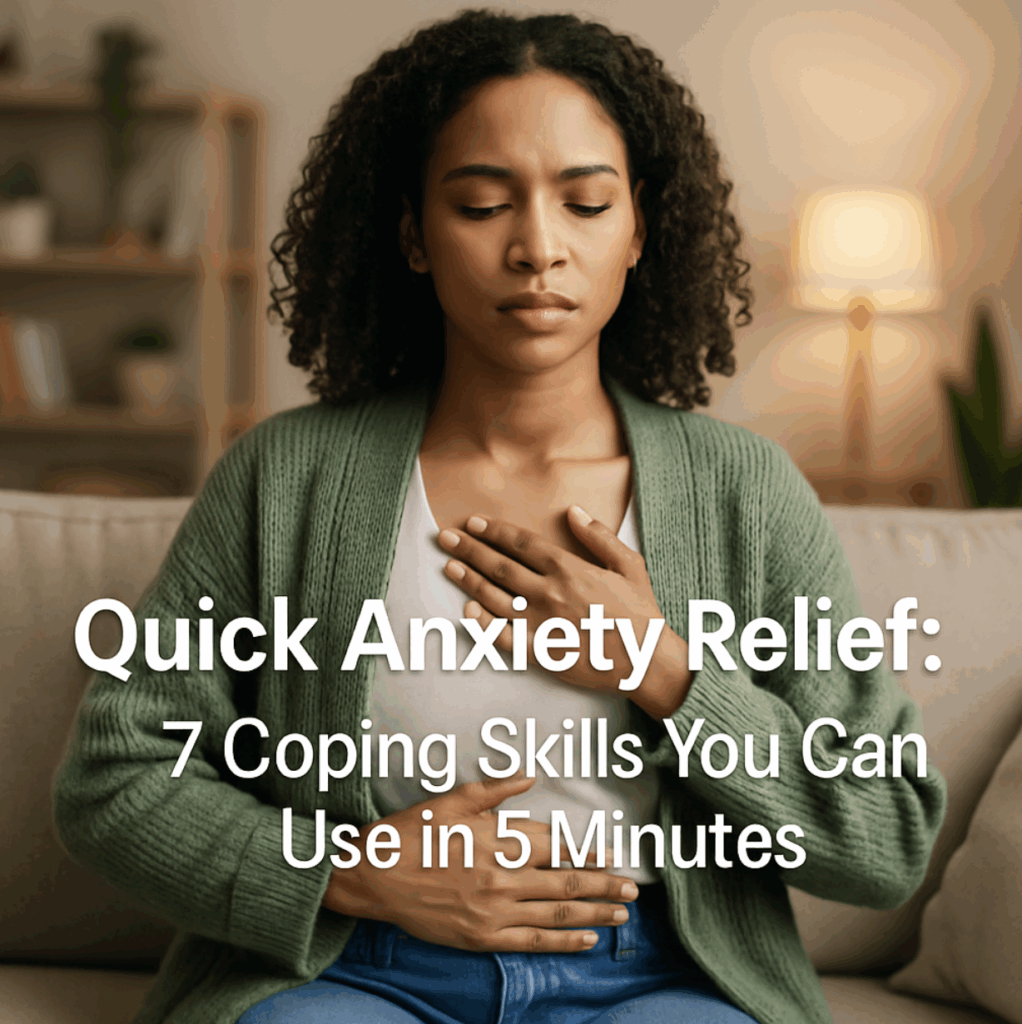
Nighttime anxiety can feel stronger when it’s quiet and your brain has less to focus on. Light and sleep-cycle changes can keep your body “on.” Here are 7 quick skills to help you feel calmer before sleep.
Join 10,000+ readers getting weekly insights on better emotional health
Key Takeaways
Do your thoughts get louder at night? When it’s quiet, your brain has less to focus on and worries can feel bigger. Changes in light and sleep rhythm can also keep your body “on,” which makes calm harder.
Anxiety and sleep affect each other. You feel tense, you sleep less, then you worry about not sleeping, and the cycle continues.
This guide gives you 7 quick skills you can use in 2–5 minutes tonight to settle your body and mind. Pick one skill, practice it, and give yourself a calm start.
Anxiety is part of your body’s safety system. It tries to protect you. Quick skills tell your body, “You are safe enough right now.” They slow breathing, steady the senses, relax tight muscles, and guide thoughts. They do not replace care from a professional, but they can help you feel better fast and make therapy easier.
Before a stressful event (a call, a meeting, a drive).
During a spike of panic.
Each day for a few minutes so they become natural.
Skill #1 — The 60-Second Breath (Downshift fast)
What it is: A calm breath pattern that turns on the “rest and relax” system.
How to do it
Breathe in through your nose for 4 counts.
(Optional) Hold for 1–2 counts.
Breathe out through your lips for 6–8 counts.
Keep your shoulders soft. Repeat for 1 minute.
Why it helps: Longer exhales send “stand down” signals to your heart and nervous system.Try it now: Do 6 slow rounds. Notice if your jaw or shoulders loosen.
Skill #2 — 5-4-3-2-1 Grounding (Re-enter the room)
What it is: A quick way to return to the present.
How to do it Find: 5 things you see, 4 you can touch, 3 you hear, 2 you smell, 1 you taste. You can do this in your head or whisper it.
Why it helps: It pulls your mind out of worry thoughts and anchors you to the room.Try it now: Touch your chair. Name its texture. Listen for a soft sound you can barely hear.
Skill #3 — Temperature Reset (Cold water, calm body)
What it is: A short cool splash or cool pack to signal “slow down” to your body.
How to do it Splash cool water on your face for 10–20 seconds, or hold a cool pack or damp cool cloth to your cheeks.
Why it helps: A brief cool touch can lower arousal and slow the heart a bit.
Safety: Use cool, not ice-cold. If you have heart or medical concerns, skip this step.
What it is: A simple muscle routine that teaches the body to relax on cue.
How to do it Pick 3 common tight spots: jaw, shoulders, hands. For each area: gently tighten 3 seconds, then release 6–8 seconds. Notice the difference. Repeat once.
Why it helps: Relaxed muscles send calm messages back to the brain.Tip: Pair the release with a word like “soften” or “safe.”
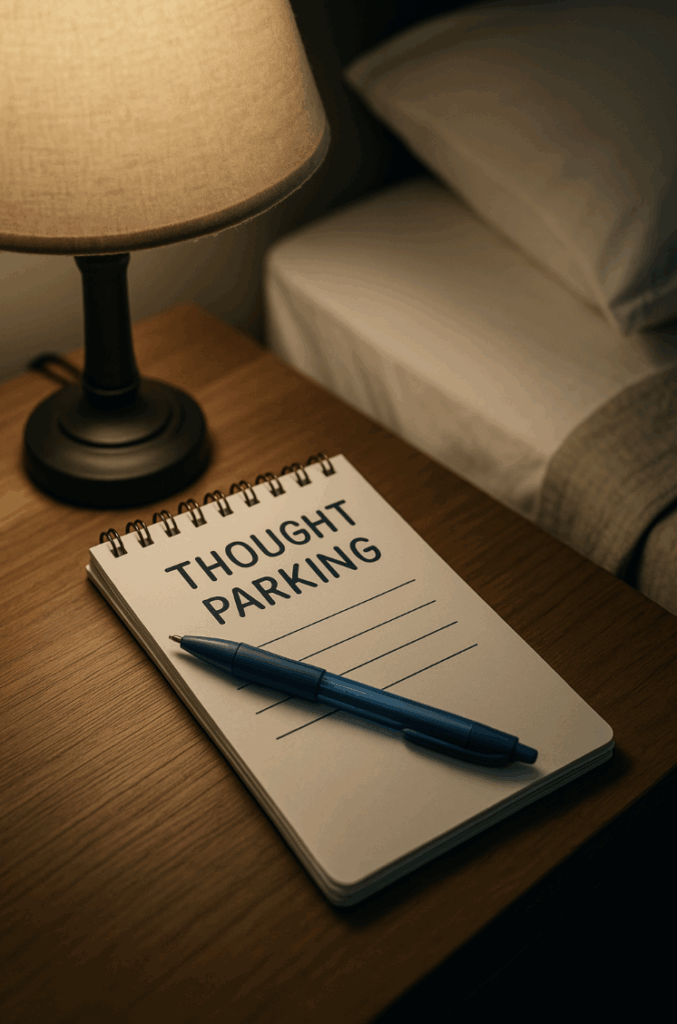
Skill #5 — Thought Parking (Contain spirals)
What it is: A way to set worries aside so you can rest or focus.
How to do it Open a note called “Parked for Morning.” Write 2–3 items you will handle tomorrow at a set time (e.g., 10:30 — email HR; call clinic; check budget).
Why it helps: Planning a time lowers the urge to fix everything right now.
Script: “Thanks, brain. It’s on the 10:30 list.”
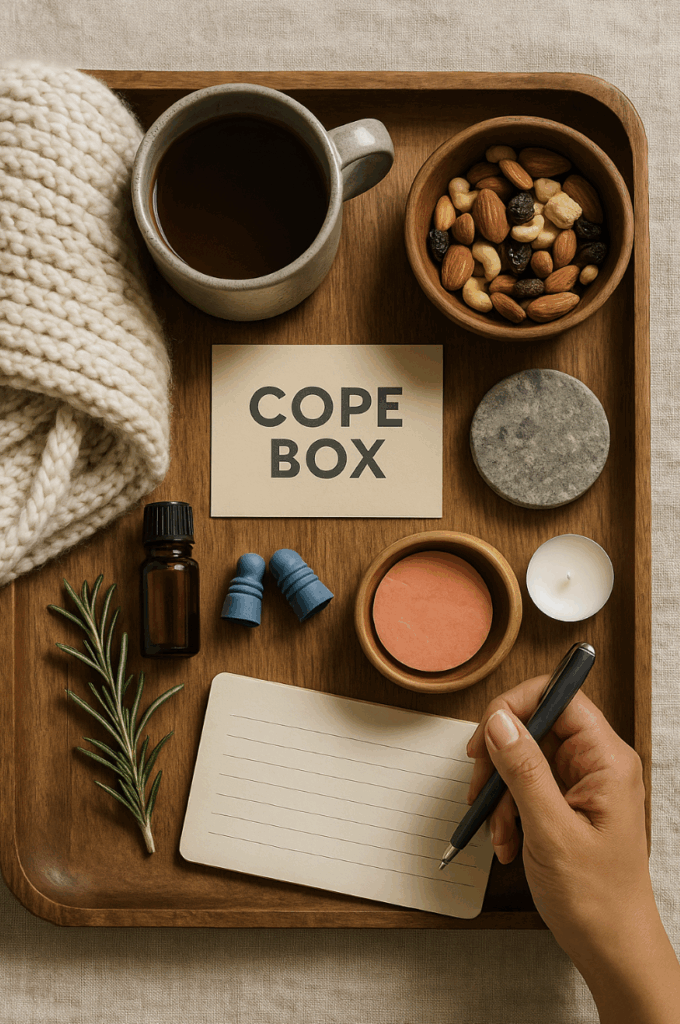
Skill #6 — The Cope Box (One soothing action, on demand)
What it is: A small set of items that calm your senses fast.
How to do it Pack one item per sense:
Sight: nature photo or short calm video
Touch: smooth stone, soft sleeve, or textured card
Scent: lavender sachet or orange peel
Sound: 90-second slow song or white noise
Taste: mint or ginger candy (can help with queasy stomach)
Why it helps: Gentle input tells the alarm system it can ease up.Note on nausea: Anxiety can upset the stomach. Slow breathing, mint or ginger, and small sips of water often help. If it keeps happening, talk with a clinician.
Skill #7 — Ride the Wave (Urge-surfing in 3 steps)
What it is: A mindset that notices the anxiety wave without fighting it.
How to do it
Name it: “This is a wave of anxiety.”
Breathe and watch: Use 60-second breathing as you picture the wave rising, peaking, and falling.
Tiny action: sip water, stand up, look out a window, or text a trusted person.
Why it helps: Allowing the feeling to crest and fall often makes it pass faster. Looking for guided support—now or when you’re ready? Use QuickCounseling to Find a Therapist who works with anxiety, panic skills, or CBT/CBT-I. A few sessions can make these tools second nature.
Everyday habits that make these skills stronger
Practice when calm. Two to three minutes a day builds “muscle memory.”
Light, caffeine, movement. Get morning light, move your body, and set a caffeine cut-off time.
Evening rules. Try a “phones-off” window and keep tough talks earlier when possible.
Kind self-talk. Swap “What is wrong with me?” for “My system is loud. I can use a skill.”
Sleep basics. Keep a steady sleep and wake time if you can.
When to seek extra help
Reach out to a licensed professional if:
You have trauma and certain places or times trigger fear.
Anxiety shows up most days or 3+ times/week for several weeks.
You avoid work, school, driving, or people due to worry or panic.
You use alcohol or drugs to cope.
You have frequent panic attacks, ongoing nausea, or poor sleep that will not improve.
Therapies that help:
CBT (talk therapy): teaches tools to reduce worry and avoidance.
CBT-I: helps if anxiety and sleep problems go together.
Medication: may help some people; ask a prescriber about risks and benefits.
Telehealth or in-person: choose the format you will use.
Start with longer exhales and 5-4-3-2-1 grounding. If your heart races, try a brief cool-face reset. Then return to slow breathing.
Does cold water actually help?
A short cool splash can signal calm to the body. Use cool, not ice-cold. Skip if you have health concerns.
What’s the best breathing method?
The best way is the one you will do. Try “in 4, out 6–8” or box breathing (4-4-4-4). Keep it gentle.
Why aren’t these working for me?
They work best with daily practice and good support. If you feel too “amped,” start with grounding or the temperature reset first.
Can anxiety cause nausea?
Yes. The brain and gut are linked. Breathing, mint or ginger, and water can help. If it keeps coming back, check with a clinician.
When should I see a therapist?
If anxiety harms your daily life or you feel stuck, it’s time to get help. A therapist can tailor tools to you.
You don’t have to figure this out alone. When you’re ready, use QuickCounseling to Find a Therapist who specializes in anxiety and panic skills—near you or online.
If you’re in crisis or thinking about harming yourself, call or text 988 (U.S.) or use your local emergency number.
Questions or tips that help you at night? Share them in the comments or reply to our welcome email—we read every note.
What to do today
Practice 60-second breathing once this morning and once tonight.
Build a tiny cope kit you can reach in under a minute.
DISCLAIMER: QUICKCOUNSELING.COM IS A TECHNOLOGY COMPANY, NOT A THERAPY COMPANY OR PROFESSIONAL SERVICE SUPPLIER. SERVICE PROVIDERS USE QUICKCOUNSELING.COM AS A MARKETING TOOL TO PROMOTE THEIR OWN SERVICES.