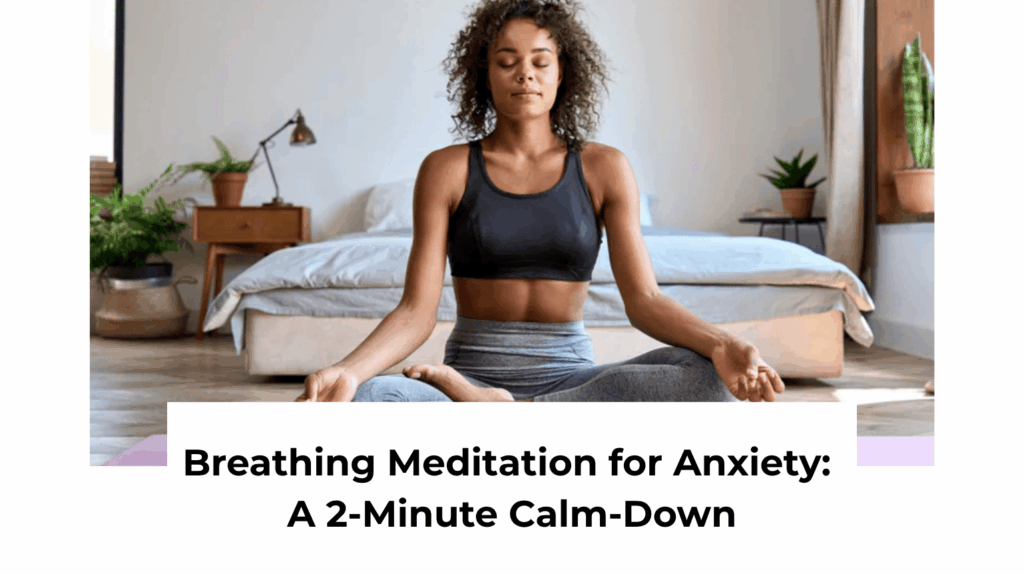


Key takeaways
A 2-minute breathing routine can quickly lower anxious feelings.
Follow inhale 4, exhale 6 (or any slow, steady rhythm that feels good).
Use it anywhere—before a meeting, during a worry spike, or at bedtime.
There’s a 1-week mini plan below to help you practice daily.
Want extra support? Find a therapist
When anxiety rises, your breath often turns fast and shallow, which can make your body feel even more alarmed. A short breathing meditation—easy inhale, slightly longer exhale—tells your nervous system it’s safe to relax. In about two minutes, you can lower the “fight-or-flight” feeling, think more clearly, and feel more in control.
Want support from a professional? Find a therapist.
Anxiety speeds up your breathing and tightens your chest. Slow, steady breaths with a longer exhale switch on your body’s “rest and digest” system. That shift can lower heart rate, release muscle tension, and quiet racing thoughts. You don’t need huge breaths; you need comfortable, calm breaths that your body can follow without strain.
Tip: Think “soft in, longer out.” Comfort over intensity.
Setup: Sit back or stand tall. Unclench your jaw, drop your shoulders, and breathe through your nose if you can. Pick one pattern below and follow it for about 2 minutes.
Want more skills for evenings? See Anxiety at Night: 5 Ways to Help.
Looking for other quick tools? Browse the Anxiety at Night: 7 Coping Skills in 5 Minutes for short, 2–5 minute practices.
A big, fast gulp of air can make dizziness or tingling worse. The helpful version is slow and light in, longer out. Think “calm inhale, extended exhale”—that’s the switch that settles your system.
That feeling is common with anxiety. Try this 3-step reset:
1. Drop your shoulders and exhale slowly through pursed lips.
2. Do 3 gentle belly breaths (in 3–4, out 5–6).
3. Ground yourself: name 5 things you see.
A little every day works best—1–2 minutes, morning and evening. The habit makes it easier to use during stressful moments.
Yes. Keep counts shorter and playful for kids (smell the flower, blow the candle). For older adults, move at a comfortable pace and avoid straining; longer exhales still help most.
It’s a strong tool, and many people feel real relief, but it’s not the only tool. If anxiety is getting in the way of life, a therapist can add skills like CBT, exposure practice, or lifestyle changes. Find a therapist.
Yes. Pause, breathe normally, and try again later with shorter counts and fewer rounds. Comfort first.
Ready for step-by-step help that fits your life? Find a therapist.
If you or someone you know is thinking about suicide, is in emotional distress, or needs immediate support, call or text 988 to reach the Suicide & Crisis Lifeline (U.S.).
Help is available 24/7.

© Quick Counseling. 2026. All rights reserved.
DISCLAIMER: QUICKCOUNSELING.COM IS A TECHNOLOGY COMPANY, NOT A THERAPY COMPANY OR PROFESSIONAL SERVICE SUPPLIER. SERVICE PROVIDERS USE QUICKCOUNSELING.COM AS A MARKETING TOOL TO PROMOTE THEIR OWN SERVICES.