Does Online Therapy Work? (And Which Platform Works Best in 2025)
Colette Nataf
October 15, 2025
Teletherapy works — but not all platforms are equal. Compare BetterHelp, Talkspace, Rula, Grow, and Octave.
Join 10,000+ readers getting weekly insights on better emotional health
Key takeaways
Teletherapy is proven to be just as effective as in-person therapy for anxiety, stress, and sleep-related issues.
Research from the NHS, Cochrane, and Mayo Clinic confirms online CBT can deliver long-term results.
BetterHelp ranks #1 among therapy apps for flexibility, accessibility, and therapist availability.
Talkspace, Rula, Grow Therapy, and Octave also perform well — especially for users with insurance.
Finding the right therapist matters more than the platform; you can find a therapist who fits your needs today.
Quick-Take:
Yes — online therapy works, and the research is clear. NHS and Mayo Clinic findings show that teletherapy can treat anxiety, depression, and stress as effectively as in-person care¹.
Cochrane reviews confirm that internet-based cognitive behavioral therapy (iCBT) delivers equal or better outcomes for many conditions².But with so many therapy platforms now available — from BetterHelp and Talkspace to Rula, Grow Therapy, and Octave — it can be hard to know which is right for you.
Ready to dive in? Find a therapist who will be the right fit for you.
The Science Behind Teletherapy
Teletherapy (sometimes called telehealth mental health care) lets you meet with licensed therapists through secure video, phone, or chat instead of an office. The approach is no longer experimental — it’s mainstream.
According to the Mayo Clinic⁴, virtual sessions are now standard care options for anxiety, depression, PTSD, and adjustment stress. Cochrane reviews have found that therapist-guided iCBT produces nearly identical results to face-to-face therapy³.
A few standout studies:
NHS “Talking Therapies”¹: More than 27,000 patients reported equal improvement online as in person.
Cochrane ²: Therapist-guided online CBT matched in-person effectiveness for depression and anxiety.
Mayo Clinic⁴:Virtual therapy expands access, reduces missed appointments, and maintains treatment results.
WebMD⁵: Confirms most recent studies show online therapy is “as helpful as in-person sessions” for most people.
The science isn’t debating if online therapy works anymore — it’s confirming how well it works.
The Big Players: 2025 Online Therapy Comparison
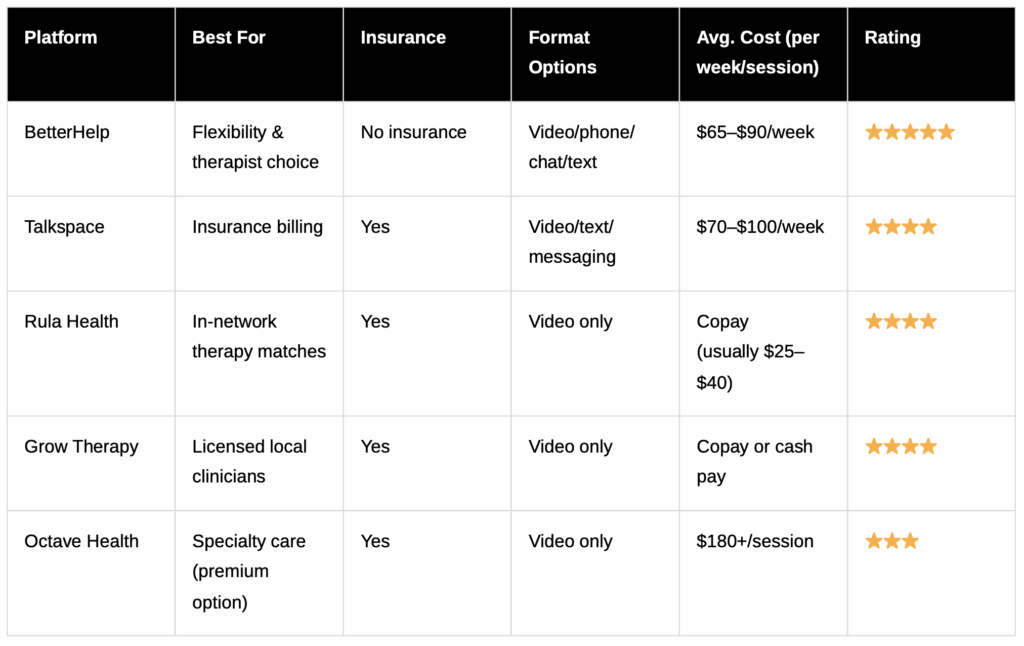
The pandemic normalized therapy from the couch, and the options exploded. While all of these platforms offer mental health support, they differ in cost, insurance coverage, and flexibility. Here’s how they stack up:
? Why BetterHelp Comes Out on Top
When you measure affordability, accessibility, and therapist variety, BetterHelp consistently rises to the top.
1. Largest Therapist Network
BetterHelp connects users with more than 30,000 licensed therapists across the U.S., making it the largest online therapy provider worldwide. The platform’s matching algorithm pairs clients to therapists in under 48 hours — often faster than any competitor.
2. Flexible Ways to Connect
Video, phone, live chat, or messaging — BetterHelp lets you choose how and when to talk. You can even switch formats mid-week, which isn’t possible on most insurance-based platforms.
3. Consistency Builds Results
Mayo Clinic and Cochrane data show therapy outcomes improve with session consistency. BetterHelp’s unlimited messaging model keeps you connected between live sessions, helping you apply coping tools in real time.
BetterHelp’s unlimited messaging keeps you connected — especially when applying quick coping skills for anxiety between sessions.
4. Affordable Without Insurance
At roughly $65–$90 per week, BetterHelp costs less than a single in-person session in many states. While it doesn’t accept insurance, its flat weekly fee makes budgeting predictable — unlike platforms that bill per session or copay.
5. Accessibility and Diversity
BetterHelp offers bilingual therapists and cultural or identity-affirming matches for LGBTQ+, faith-based, and BIPOC clients. The company also supports international users, making it ideal for people outside the U.S. — a major advantage over Rula or Grow Therapy.
6. Satisfaction and Trust
In multiple independent reviews, BetterHelp ranks highest in user satisfaction and therapist responsiveness. It also has the broadest hours of therapist availability, including weekends and evenings.
If you’re still unsure, you can find a therapist anytime to explore more guided options.
When Other Platforms Might Be a Better Fit
While BetterHelp leads overall, each alternative has strengths worth knowing.
? Talkspace: Best for Insurance
If you want to use insurance, Talkspace partners with most major plans and EAP (Employee Assistance Programs). The platform offers weekly live sessions plus unlimited text messaging. Downside: Therapist choice is more limited, and users often wait longer for responses compared to BetterHelp.
? Rula Health: Best In-Network Option
Rula Health works like a therapist directory that helps you find in-network licensed professionals. You pay your copay, not a subscription. It’s ideal if you have insurance and prefer continuity with one dedicated therapist. Downside: It’s video-only, and matching can take days or weeks.
? Grow Therapy: Best for Local Licensed Clinicians
Grow Therapy connects you with licensed in-state therapists who accept your insurance. It’s easy to find clinicians who specialize in trauma, ADHD, or couples counseling. Downside: Like Rula, sessions are scheduled individually, and there’s no messaging between appointments.
? Octave Health: Best for Premium, Specialty Care
Octave Health offers premium therapy for high-income clients or those needing advanced care, such as couples therapy, anxiety treatment, or burnout recovery. Downside: It’s the most expensive — typically $180–$250 per session — and not available in every state.
How to Choose the Right Platform
Choosing your platform is a bit like choosing your therapist: it depends on your lifestyle, comfort, and goals.
Ask yourself:
Do I want insurance to cover sessions (Talkspace, Rula, Grow, Octave)?
Do I want 24/7 access to messaging (BetterHelp)?
Am I okay with a subscription model instead of per-session billing?
Do I want video, or would chat feel easier to start with?
If you’re still unsure, start with BetterHelp’s quiz — it only takes a few minutes to match with a therapist, and you can cancel anytime.
What Research Says About Online Therapy Outcomes
Effectiveness:
Cochrane and NIH meta-analyses show that online CBT reduces anxiety and depression symptoms as effectively as in-person therapy.
Access and Cost:
The Mayo Clinic notes that teletherapy improves access for people in rural areas, reduces travel costs, and increases appointment follow-through.
Format Flexibility:
Text-based therapy can be helpful when guided by a licensed therapist, and consistent communication (like BetterHelp’s unlimited messaging) improves emotional progress.
Insurance Coverage:
Virtual therapy coverage expanded dramatically after 2020. Mayo Clinic confirms that most major insurers now reimburse online therapy the same as office visits.
The Real-Life Benefits People Notice
Comfort: You’re in your own space, which reduces tension.
Consistency: Easier scheduling means fewer missed sessions.
Privacy: You choose your setting — home, car, or park.
Empowerment: You can switch therapists or formats instantly.
Control: It’s easier to open up when you feel in control of the environment.
These small differences add up to long-term success — something both Cochrane and Mayo data emphasize⁷⁸, and if anxiety builds before sessions, try this quick breathing meditation for anxietytechnique at home.
Gentle Next Step
Starting therapy doesn’t have to feel like a big leap. BetterHelp’s network and flexibility make it easier to begin, even if you’re unsure what you need yet. You can message your therapist between sessions, track your progress, and make therapy fit your life — not the other way around.
? Start with BetterHelpand see how the right match can make therapy simpler, safer, and more effective — wherever you are, If your thoughts race before bed, these anxiety at night tips can complement your therapy plan.
If You’re in Crisis
If you or someone you know is struggling, call or text 988 to reach the Suicide and Crisis Lifeline (U.S. only). Help is available 24/7. You are not alone.
DISCLAIMER: QUICKCOUNSELING.COM IS A TECHNOLOGY COMPANY, NOT A THERAPY COMPANY OR PROFESSIONAL SERVICE SUPPLIER. SERVICE PROVIDERS USE QUICKCOUNSELING.COM AS A MARKETING TOOL TO PROMOTE THEIR OWN SERVICES.