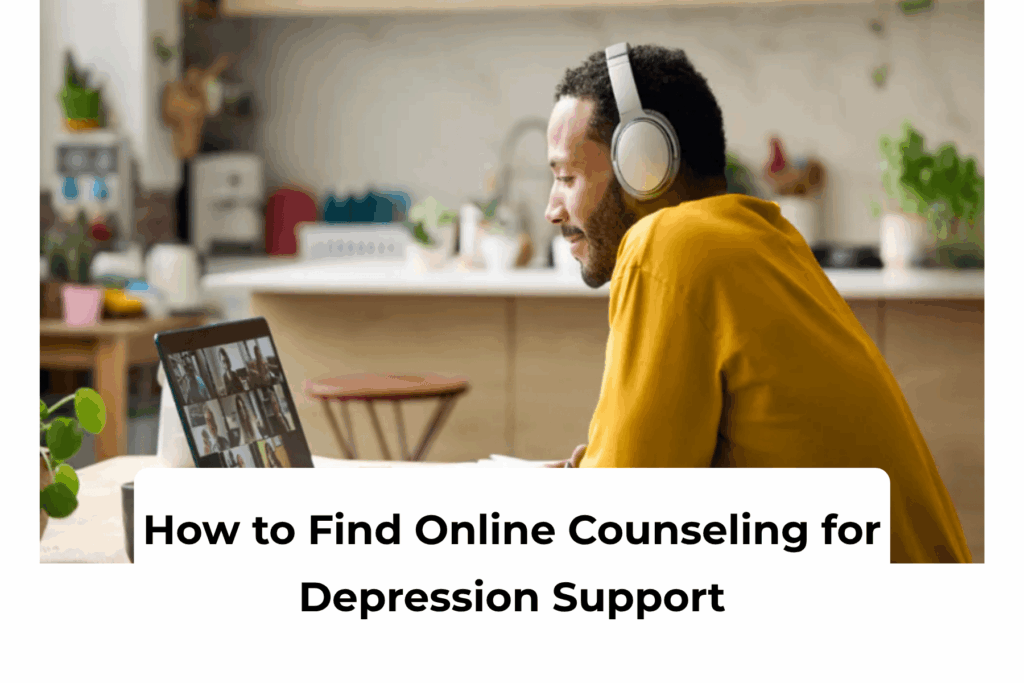
If you feel low, stuck, or worn down, online counseling for depression support can help you move forward one small step at a time. It removes travel, saves time, and brings care to your phone or computer. You can start where you are and go at your pace. If you are ready to look at options today, Find a licensed therapist near you.
Understanding Online Counseling for Depression Support
Online counseling uses secure video, phone, or messaging to connect you with a licensed therapist. Many people choose it because it fits busy schedules. Sessions usually last 45–55 minutes and follow a clear plan. —if you want to see the flow of a typical session, there’s a simple overview you can read.
Therapy can lift mood by teaching skills, building routines, and breaking heavy problems into small steps. Over time, practice can support new patterns of thinking and feeling.
Depression can affect sleep, energy, focus, and motivation. Therapy helps by teaching skills, building routines, and breaking heavy problems into small steps. Over time, practice can reshape habits and support new patterns of thinking and feeling.
Many therapists use practical methods that work well online. One common approach is cognitive behavioral therapy (CBT). It helps you notice thoughts, shift unhelpful patterns, and take action in daily life. If you want the basics in plain language, read about CBT strategies that work online. (If your symptoms include worry or panic, it can help to understand what anxiety feels like as well.)
How It Works
- Clarify your goals: mood relief, better sleep, more energy, or handling stress at work or home.
- Choose your format: live video, phone, or secure messaging. Video offers face-to-face feel; phone can be more private; messaging can be flexible.
- Search for licensed therapists in your state. Check credentials, experience with depression, and treatment methods. (For anxiety-specific help, you can also read How to Find Online Anxiety Counseling Near You.)
- Review costs and coverage. Ask about insurance, sliding-scale fees or packages, HSA/FSA, and any platform fees.
- Look for privacy and security details. Seek HIPAA-compliant platforms and private spaces for sessions.
- Schedule a brief consult. Ask about their approach, what sessions look like, and how progress is measured.
- Test your tech. Check internet speed, camera, microphone, and a quiet, comfortable space, use headphones if others are nearby.
- Prepare for the first session. Note your main concerns, goals, and a few questions.
- Agree on a plan. Decide session frequency, methods, and simple homework between sessions, (a “small wins” plan—see 7 Effective Online Anxiety Counseling Tips Near You).
- Review fit after 2–3 sessions. Notice how you feel during and after sessions. It’s okay to adjust or switch if needed.
Who It Helps & Benefits
Online counseling helps adults who want flexible, private care without travel. It can be a good fit for parents, caregivers, students, and professionals with tight schedules. Over time, therapy can support better mood, stronger coping skills, and steady routines you can rely on. Many people also see the long-term benefits of therapy in work, relationships, and health habits.
It is also helpful if you live in a rural area or have mobility concerns. You can meet a skilled therapist who understands depression without leaving home. This access can reduce gaps between sessions and help you stay consistent. Regular, bite-sized steps often add up to real change.
If your depression comes with worry or panic, online support can address both. Therapists can teach calming tools, routine building, and problem-solving for tough moments (learn what this looks like in What Is Stress Management Counseling for Adults? and Why Seek Stress Management Counseling for Adults?).
Real-Life Example
Maya is a working parent who felt flat, tired, and behind on everything. Getting to an office felt impossible. She booked an online consult and met a therapist by video during her lunch break. In the first sessions, they set small, clear goals: a short walk three days a week, a simple bedtime plan, and a weekly check-in on mood and energy.
After three weeks, Maya noticed small wins. She felt a bit less foggy on days she walked. She learned to pause and question harsh thoughts. Over two months, she added one supportive friend to her routine and started planning meals on Sundays. The steps were modest, but they stuck. Online sessions gave her structure and a steady place to talk things out.
Myths vs Facts
- Myth: Online therapy is not real therapy.
Fact: Licensed clinicians provide care online using evidence-based methods (see Practical How-To Guide: Stress Management Counseling for Adults).
- Myth: You must feel worse before you feel better.
Fact: Progress can be gradual and steady, with tools that make daily life easier.
- Myth: Online therapy is impersonal.
Fact: Many people form strong, trusting bonds with therapists over video or phone.
Practical Tools You Can Try
- Five-senses grounding: Name 5 things you see, 4 you feel, 3 you hear, 2 you smell, 1 you taste.
- Activity scheduling: Pick one small, meaningful action each day (10-minute walk, call a friend). Track how you feel before and after.
- Thought check: When a harsh thought shows up, ask, “What is the evidence?” and “What is a kinder, still-true view?” (see 3 CBT Tips to Reduce Anxiety Quickly).
- Sleep routine: Aim for the same sleep/wake time, limit screens before bed, and keep your room dark and cool (more help in Anxiety at Night: 5 Ways to Get You Back to Sleep and Anxiety at Night: 7 Coping Skills in 5 Minutes).
- Breathing reset: Try a 2-minute breathing calm-down to settle your system.
For more step-by-step CBT ideas, skim Cognitive Behavioral Therapy for Anxiety: Practical Strategies and Why Choose Cognitive Behavioral Therapy for Anxiety?.
When to Seek Professional Help
Consider reaching out if low mood lasts most days, you lose interest in things you used to enjoy, daily tasks feel overwhelming, or your sleep and appetite shift a lot. If you feel hopeless or stuck, support can help you find your next step. You do not have to do this alone. If you are ready to start, match with an online therapist today.
Conclusion
Finding online counseling for depression support can be simple and gentle. Start with small goals, choose a format that fits your life, and give yourself time to grow. The right therapist will meet you where you are and help you build skills that last. You can begin today from the privacy of home. Find a licensed therapist near you and take your next step toward feeling better.
(Related guides: Does Online Therapy Work? (And Which Platform Works Best in 2025) • Therapy Without Insurance: Low-Cost & Sliding-Scale Options • What Are the Best Online Anxiety Counselors Near Me? • How to Find Online Anxiety Counseling Near You)